
50 years in Amador County · Lifetime warranty · Free in-home estimates
Related Area Rugs Options
Explore other area rugs styles and projects we handle.
Area Rugs Guide
Custom Stair Runners in Amador County: Tread Sizing, Construction, and Install Methods
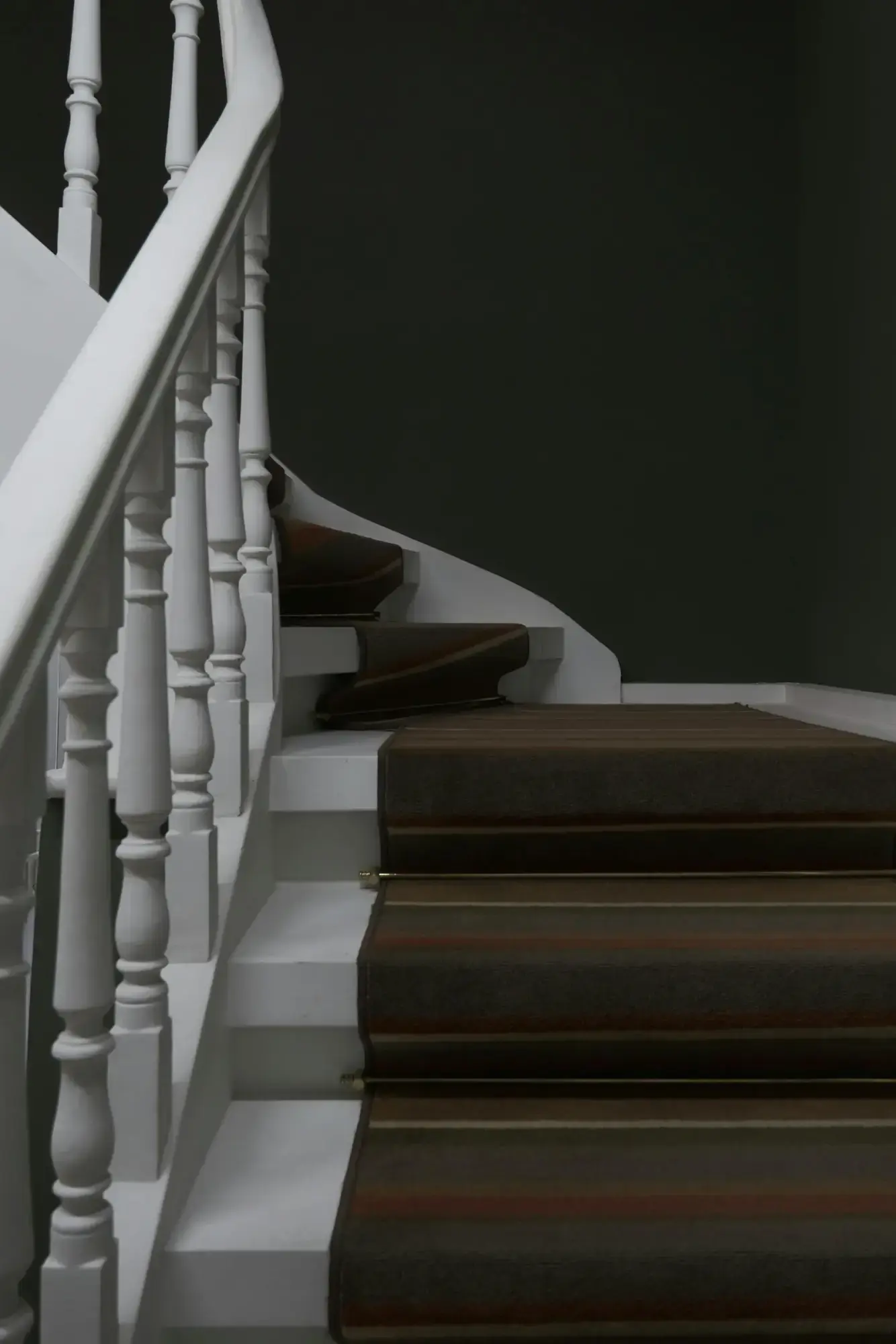
A custom stair runner is a long, narrow area rug built from carpet, sized and bound to fit the geometry of a specific staircase. Most residential stairs in Amador County, Sutter Creek, Jackson, Pine Grove, and Martell homes are 36 inches or wider, and the runner that sits down the center of those treads is typically 24 to 32 inches wide, leaving 3 to 4 inches of exposed wood or tile reveal on each side. That exposed reveal is the visual signature of a runner versus wall-to-wall carpet on stairs: the runner draws the eye down the line of the stairs while keeping the underlying material visible at the edges, which is why runners are the preferred treatment for homes with stained hardwood or tile stairs that the homeowner wants to keep showing.
Read the full area rugs guideShow less
Stair runner carpet is not the same selection as standard area rug carpet. Stairs demand low-pile, dense, tightly woven constructions for two reasons: traction underfoot (a high-pile plush is slippery and unsafe on a 30-degree stair slope) and visual cleanliness (low pile reads as crisp around the binding edge and along the nosing where the runner wraps the front of each tread). Wool, nylon loop, and dense low-pile cut pile in tightly twisted yarns are the strongest constructions; thick plush and shaggy frieze are wrong for stairs. The long edges of the runner must be bound (fabric-taped) or serged (yarn-wrapped) so the cut edge does not unravel under foot traffic; binding is the more common and faster finish. Padding is required, but stair padding is thinner and denser than standard area rug pad (typically a high-density rubber waffle or 1/4-inch felt-and-rubber pad), because thick pads make the runner shift underfoot on the slope. Two installation methods dominate the residential market: the Hollywood fold (the runner is pulled tight and tacked at each riser-tread junction, producing a snug, low-profile look that follows the stair geometry exactly) and the waterfall fold (the runner cascades down the front of each tread with no tack at the nosing, producing a softer, more traditional look that costs less to install). Both require professional stair-pin or staple installation along the back edge of each tread under the nosing. Custom stair runners pair naturally with wall-to-wall stair carpet upstairs hallways and with area rugs in the landings above and below. Visit our Sutter Creek showroom to handle stair-runner-appropriate carpet samples, binding swatches, and pad options before you commit to width and length.
Ready to Transform Your Home?
Get a free estimate from our experienced team. We've been helping Gold Country homeowners since 1976.